
 AI only works with architecture: watch the masterclass now
  Digital innovation in the building materials trade: AI image search for STARK Germany
  Knowledge to go: Medienwerft Downloads – see for yourself
  End2End solutions from UX to hosting: Benefit from the expertise of the FIS Group!
  Do you fit into our team? Discover all vacancies now and apply now!
  Ready for the shipyard? Find out what you can look forward to as an apprentice at Medienwerft!
  Award-Winning: Medienwerft is Emporix Partner of the year 2026!
  Insights and Networking: Register now to FIS INSITE 2026!
  Performance despite Great Firewall of China?
  Award-winning:
E-Commerce Trends 2026 – New rules for digital commerce
The game is on: in 2026, e-commerce will become smarter, more connected, and more efficient. Smart architectures, integrated systems, and AI-based automation are changing the rules of the game and opening up new opportunities along the entire customer journey. Those who think strategically now and make targeted use of new technologies will secure decisive competitive advantages in tomorrow’s digital commerce.
As digital and e-commerce experts, we have identified seven key trends for the coming year that will be high on the agenda for many companies next year. One or more of these could also be a game changer for you – we would be happy to support you in implementing them!

Dirk Reimsbach
Head of Commerce Development
Digital commerce will continue to undergo profound changes in 2026. AI speeds up searches, automates processes, and is intelligent enough to bring people on board at the right time. The move to the cloud will become inevitable for anyone still using SAP Commerce on-premise, and with all this automation, it will be even more important not to lose sight of the customer experience.
What is currently driving not only our customers but the entire e-commerce market can be found in our top 7 e-commerce trends for 2026:
- AI-ready Architecture: The basis for autonomous commerce
- Total Cost of Ownership: Replatforming without high entry costs
- Multimodal AI: The key to connected product data
- Modern CMS also in B2B: Scalable and e-commerce ready
- B2B portals reimagined: From risky project to value-adding platform
- SAP Commerce: All roads lead to the cloud
- ERP-driven commerce: Scalability through seamless integration
1. AI-ready architecture: The basis for autonomous commerce
When it comes to artificial intelligence in e-commerce, the question is no longer whether to use it, but how. Many system architectures are not yet geared toward the use of AI and therefore fall far short of exploiting the full potential of artificial intelligence. For AI to be effective in commerce, systems need to be designed for it from the outset: AI-ready architectures link information in real time, create a common understanding of data, and enable decisions to be made and executed automatically.
How does this create true autonomous commerce?
A commerce platform that thinks for itself and brings people into the loop at the right time: With this in mind, our technology partner Emporix has developed the Autonomous Commerce Execution Platform (ACE), which combines data logic, process control, and AI capabilities in a central architecture. The most important commerce scenarios are implemented in value streams – structured, ready-to-use, and flexible process chains that seamlessly integrate systems, data, and roles to control and optimize end-to-end commerce processes. On this basis, AI agents can independently control complex B2B processes, while humans in a “human-in-the-loop” model safeguard critical decisions.
Processes that optimize themselves automatically and employees who have more time for strategic, value-adding tasks: By switching to an AI-ready architecture, you create the conditions for efficient and cost-saving processes.


2. Total Cost of Ownership:
Replatforming without high initial costs
Replatforming has proven to be an effective lever for sustainably reducing the TCO (Total Cost of Ownership) in e-commerce. In the long term, this can significantly reduce licensing and hosting costs in particular, as well as the costs of maintenance, further development, and upgrades – as the example of our customer HABA shows: There, the TCO was reduced by up to 50% by switching platforms. The only factor that has been more significant at the outset so far has been the high initial costs of parallel operation and migration.
So how can TCO be reduced without companies having to make a large initial investment?
Solutions such as Emporix’s Autonomous Commerce Execution Platform (ACE) address this issue with a more flexible cost structure. Where complete replatforming previously required a high initial investment, the Strangler Fig approach and partial licensing now enable a “pay-as-you-grow” model. Companies only invest in the areas that are truly relevant and continue the change step by step until the entire architecture is modernized.
This significantly reduces the initial costs and makes replatforming an even more attractive way to consistently implement the lean commerce approach right from the start.


3. Multimodal AI:
The key to connected product data
In many companies, the most valuable information is often spread across different systems, formats, and data sources: texts, images, tables, sensor data, product information. Traditional AI models struggle to consistently connect this diversity. This is where multimodal embedding models come in, which not only understand heterogeneous data, but also relate it to each other.
How can AI help break down data silos?
By translating a wide variety of data types into a common semantic space, multimodal embedding models make mass data accessible in the first place. This allows information to be processed automatically and linked intelligently – the basis for making AI-supported solutions more reliable, traceable, and auditable for companies. FISMWASP Multi is the central toolbox for this and enables a wide range of AI use cases. The FIS Group’s multimodal embedding model supports better search functions, for example: With a visual search function, users can find the right product directly from a photo. The model also contributes to more efficient processes and higher data quality in areas such as recommendation systems, anomaly detection, and master data management.
We would be happy to show you how multimodal embedding models can effectively optimize your processes, increase efficiency, and which specific use cases offer real added value, especially in times of rising cost pressure.


4. Modern CMS also in B2B:
Scalable and e-commerce ready
Requirements are rising rapidly, especially in B2B e-commerce. Customers expect consistent information across websites, customer portals, shops, apps, and even marketplaces. At the same time, many companies are still struggling with historically grown system landscapes – such as old TYPO3 instances, rigid templates, and isolated solutions. New country websites, product campaigns, or services can then only be implemented with a lot of effort and long project durations.
What role do modern content management systems play in this?
Modern headless CMS such as Storyblok, Contentful, or Magnolia consistently separate content and presentation. Content is maintained centrally once and then played out via API in shops, portals, apps, corporate sites, or other touchpoints. This makes implementation significantly faster, reduces technical dependencies, and ensures a consistent customer experience throughout the entire B2B customer journey. In addition, existing systems such as PIM, ERP, or CRM can be integrated more easily.
The separation of content and frontend shortens development times and enables more flexible campaign planning. Intuitive user interfaces and visual editing allow marketing teams to quickly create, customize, and publish content. For development teams, this means more time to implement new solutions instead of making small adjustments to the website on a daily basis.
Modern content management systems can also accelerate B2B digital projects – with the aim of getting the most out of your data, teams, and budgets.


5. B2B portals reimagined:
From risky projects to value-adding platforms
B2B portals have long been considered complex mammoth projects with high integration costs and long runtimes. However, the picture will be very different in 2026: New processes, tools, methodologies, and technological approaches will greatly simplify implementation—and make B2B portals one of the most important e-commerce trends in B2B.
The change is based on clear objectives, modular platform architectures, and a consistently user-centered approach. Instead of monolithic systems, companies are relying on composable, API-based solutions that can be introduced step by step. MVP approaches, agile methods, and iterative development enable a quick project start and ensure measurable added value early on – both internally and externally.
How do design systems influence collaboration between design, development, and marketing?
CX and UX design play a central role here. B2B portals are evolving into strategic touchpoints along the entire customer journey. Design systems form the basis for this: they create consistency, accelerate design and development processes, and reduce friction between teams. This makes the introduction of an additional touchpoint, such as a customer or partner portal, predictable and efficient.
At the same time, user expectations are rising. Buyers, technicians, and decision-makers expect digital experiences at the B2C level. User centricity, relevant service design, and clearly defined use cases ensure that portals support real work processes and deliver genuine added value. Portals that are consistently geared toward user needs from the outset become part of the product—as demonstrated by the mykrone.green portal, which bundles all KRONE services in a single account, thus becoming an integral platform for users in their everyday work.
The trend for 2026 is clear: B2B portals are losing their project horror and becoming scalable platforms for efficiency, customer loyalty, and growth.


6. SAP Commerce:
All roads lead to the cloud
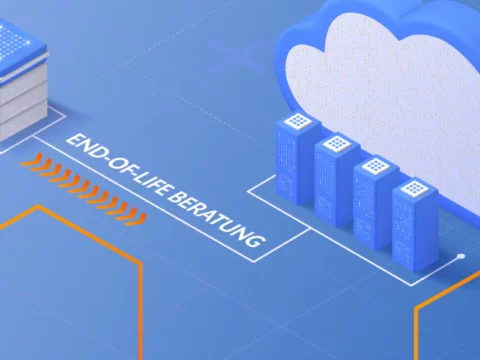
The trend has long been a reality: e-commerce is moving to the cloud. Ever since SAP announced the end of mainstream maintenance and will therefore discontinue support for SAP Commerce on-premise versions on July 31, 2026, one thing has become clear: if you want to stay competitive, you need to set the course now.
How do companies benefit from the cloud in concrete terms?
The switch makes sense now, especially for customers who prefer to purchase an e-commerce solution centrally from an established manufacturer such as SAP. The composable approach of the cloud offers countless new possibilities – because it usually allows third-party systems with functions not found in the SAP solution portfolio to be easily connected and integrated. You can be even more flexible if you use the switch to the cloud for replatforming.
The next step does not always have to mean ‘even more platform’: for many B2B scenarios, a lean commerce approach can also be interesting – for example, with a B2B-specific solution such as FIS/eSales. This approach focuses on typical B2B requirements (e.g. customer-specific product ranges, roles & approvals, more complex pricing logic), combined with very close SAP integration and often a leaner cost model than large suite approaches. And here’s another tip: as a certified SAP Gold Partner, we also offer you extended maintenance.
The end of life of the SAP Commerce on-premise versions marks the beginning of a new era. We are at your side both when switching to the SAP Commerce Cloud and when replatforming.


7. ERP-driven commerce:
Scalability through seamless integration
The connection between ERP and commerce systems determines more than just technical efficiency: it determines how quickly companies can respond to customer expectations today. Only those who intelligently integrate both worlds can create the basis for end-to-end processes, transparent supply chains, and dynamically personalized experiences. The close connection between ERP and commerce is already a success factor today – by 2026, it will become the foundation of every AI-supported commerce strategy.
How do companies connect their shop and ERP so that processes mesh seamlessly?
Solutions such as the FIS/ShopConnector demonstrate how modern ERP integration works today. Online orders are automatically and accurately transferred to SAP S/4HANA, without the need for manual Excel lists, duplicate data entry, or media breaks. Companies retain their existing shop front end, while the connector establishes a direct connection to SAP. At the same time, commerce teams increase their process reliability because orders can be monitored and processed centrally and flexibly expanded via data sources such as open master data or third-party apps. This significantly reduces manual effort and allows resources to be used more efficiently.
Seamless processes for satisfied customers: With efficient SAP ERP integration, you can make your shop fit for the future – thanks to maximum scalability, fast implementation, and maximum data security.



Conclusion: E-COMMERCE TRENDS 2026
From conversations with our customers, we know that for many of them, 2026 will be marked by intelligent realignment. Thanks to artificial intelligence, e-commerce will become more strategic, more connected, and more forward-looking.
Topics such as AI-ready architecture, ERP-driven commerce, and customer-friendly B2B portals show how closely technology, data, and customer experience are converging. The move to the cloud, which will be unavoidable in 2026, offers new opportunities to significantly reduce costs and optimize processes.
Whatever is on your agenda for 2026, Medienwerft supports you with a high level of expertise and decades of e-commerce experience. Contact us, we look forward to your challenge!
GIVE YOUR E-COMMERCE THE DECISIVE PUSH –
WITH OUR SUPPORT!
Where will your digital commerce be in 2026? Contact us: We will advise you on all the opportunities and possibilities. Get your company ready for the challenges ahead!

Sönke Baumann
Head of New Business
040 31 77 99 0
sbaumann@medienwerft.de

✓ non-binding & free of charge
✓ 15-30 minute initial consultation
✓ book directly via the calendar


